UNIVERSITY OF BAMENDA – FACULTY OF HEALTH SCIENCES – SECOND YEAR MEDICAL STUDENTS OF 2015
COMMUNITY HEALTH
PRACTICE IN MULANG HEALTH AREA
REPORT OF COMMUNITY HEALTH PRACTICE
(CHP) AT MULANG HEALTH AREA
BAMENDA HEALTH DISTRICT
03 - 04 JUNE 2015
By: SECOND YEAR MEDICAL STUDENTS 2015
Lecturers: Dr Mfonfu Daniel and Mrs. Kiven Solange
Supervision by : Prof. Kuaban Christopher
Download PDF version of report
Download PowerPoint presentation of report
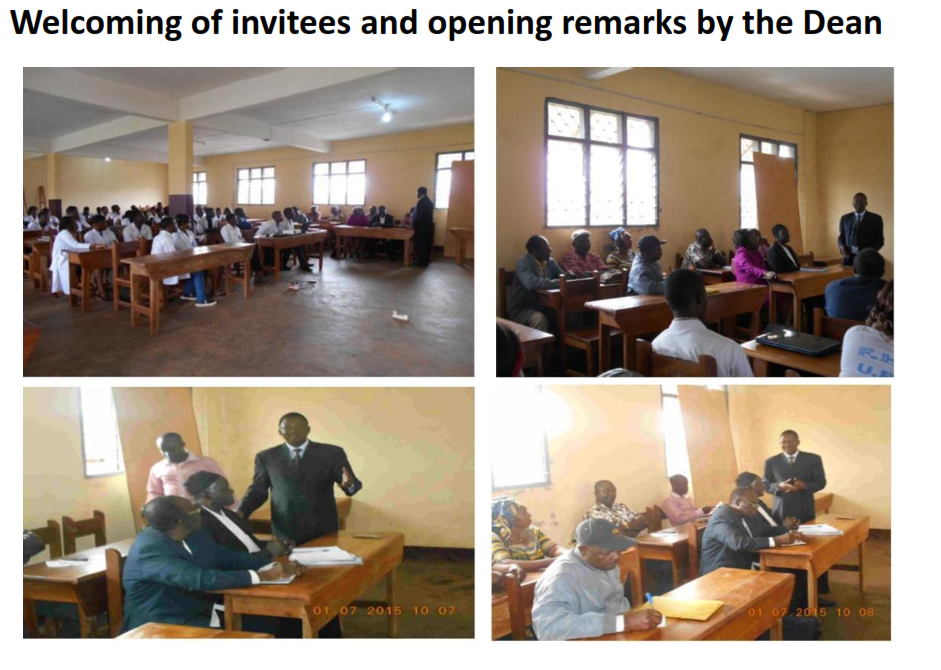
PREPARATION OF CHP AT THE LEVEL OF THE DEAN OF FHS
- The Dean requested and obtained authorizationfrom the Divisional Officer of Bamenda II by the letter no 29/06/3100/5/445 of 27 of may 2015 to carry out the community health practice and diagnosis in Mulang health area .
- The Dean requested and obtained a bus from the vice Chancellor of the University of Bamenda
- The Dean wrote the invitation for the meeting for the presentation of the results of the CHP to Administrative & Community Representative;these invitations were distributed by Dr Mfonfu Daniel
The practical training course in Community Health Practice has as objective to familiarize the second year medical students with the exercise of establishing the diagnosis of the health situation of the
community associated with the environment; and propose solutions.
OBJECTIVES:
- Collect data from households using questionnaires – on environmental sanitation and on the evaluation of the vaccination status of children 0-23 months
- Analyse data collected
- Identify health problems and risk factors that may contribute to disease occurrence
- Make recommendations to solve the problems and risk factors identified
- Educate the population on some identified factors that could cause health problems while on the field
20 teams, 19 of 3 students and 1 of 2 students were constituted and assigned as shown under sketches of the three zones ensuring that all quarters were represented. The choice of household was based on the presence of children 0-23 months. The questionnaires were filled during two days, Wednesday 03 and Thursday 04 June 2015, in the morning hours by the Medical Students level 2 in the Mulang Health Area. Each team was assisted by a mobiliser. The synthesis of data collected was made in
class in the afternoon, first by using the manual synthesis forms; and secondly entering them in the excel programs elaborated for the purpose, with the assistance of the lecturers.
Description of Mulang Health Area, in Bamenda Health District; The population of Mulang Health Area for 2015 is estimated at 29905 inhabitants

SOME LAND MARKS OF MULANG HEALTH AREA
- Office of Government Delegate of Bamenda CityCouncil
- The lowest & plain valley in the West of Bamenda town lies in the Mulang Health Area
- All streams from mile 4 stream to the stream behind the food market flow through Mulang valley forming one river at the western boundary of Mulang Health Area.
- Longla Commercial College of Commerce
- Northern boundary starts after first bridge below Foncha to Mulang
- Rendezvous junction a few metres from Lachance bridge– the eastern boundary of Mulang HA
- The Catholic Mission Ngomgham,
- The Baptist Church Musang
- The road from city chemist through Longla goes through Mulang Health Area to former Council junction
- Cow boy junction
- Presbyterian Church Musang
- Primary and secondary school Ngomgham


Ankara is a method of farming whereby all the grass cleared in the farm is gathered into big ridges and burnt
to produce better yield of crops according to the farmers. It produces food crops for the first year due to ammonia that is produced but the next the year the soil is red with no ingredients in it. Thus there is shifting of the ankara in the farm rendering the soil very infertile. This practice pushes the farmers to become fertilizers dependent. Organic farming is recommended.


Consequences of inappropriate disposal of solid waste/refuse
- Feeding ground for dogs,other stray animals
- Breeding ground for flies and ants
- Breeding ground for rats
- Breeding ground for cockroaches
- Contamination of streams,rivers, oceans
- Blockage streams causing floods
- Burning causes air pollution with carbon dioxide, carbon monoxide that chemically reacts with sunlight tocreate harmful ozone layer on the surface of earth.

- Contamination of ground water
- Production of offensive odour
- Sometimes they are feeding grounds for humans
- Burning also causes air pollution by Particulate matter, this refers to the fine particles that produce visible smoke that reduce visibility and create haze, which is a major air pollution problem for many urban and rural communities. In addition to being unhealthy, particles soil our homes.
WATER PROMOTES THE BREEDING OF MOSQUITOES
Standing water is breeding ground for Aedes mosquitoes that transmit yellow fever
 FRESH WATER promotes the breeding of ANOPHELES mosquitoes that transmit malaria parasites that is why cases of severe malaria mostly occur in the population staying at the periphery of urban areas.
 DIRTY WATER like water flowing through urban areas is the breeding ground for CULEX mosquitoes that do not transmit malaria,
METHOD FOR URBAN REFUSE DISPOSAL IS ‘SANITARY LANDFILL’
‘Sanitary landfill’ is an excavated area in an impermeable piece of land made of rocky or clay soil for the disposal of large amounts of solid waste . The refuse is spread out and compacted to a layer of about 60cm thick. At the end of the day, the compacted layer of refuse is covered with about 30cm of earth and compacted to stop flies and rats getting to the refuse and to stop any contamination reaching ground water. A bulldozer or a tractor is often used to compact sanitary landfill sites. Landfill sites must never be close to rivers, as materials from the site can contaminate water supplies. Surface runoff from adjacent areas should be diverted to reduce the amount of water draining through the sanitary landfill.


HEALTH IMPLICATIONS OF HERBICIDES
(E.G. PARAQUAT, ROUNDUP)
- Suicide; Homicide
- Skin Irritation – skin rashes, contact dermatitis
- Gastrointestinal system: nausea, vomiting, diarrhoea, sweating, restlessness and bleeding
- Reproductive System: Spontaneous abortion; Premature birth in farmers; Declining sperm count and increased abnormal sperm have been associated with exposure to the herbicide
pesticides/herbicides:
- Enlarged head & liver,
- Cleft lip & cleft palate,
- Haemorrhage, abnormal or missing digits on hands or feet and displaced or missing body parts or organs.
- The child of a mother exposed to pesticides/herbicides during pregnancy can develop cancer such as leukaemia (blood cancer), Wilms' tumour (kidney tumour), and brain cancer.
Cancer:
- non-Hodgkin’s lymphoma,
- prostate cancer; cervical cancer,
- cancer of the pancreas,
- Cancer of the testes
- Blood cancers - acute lymphoblastic leukaemia,thrombocytopenia .
- Manifested by: Weight loss, chills, fever, excessive bleeding, skin growths and tumours.
- Certain childhood cancers are related to parental exposure to pesticides/herbicides, such as increase in childhood brain tumours, leukaemia, and neuroblastoma.
Effects on Children: Children and infants are at a higher risk for illnesses from herbicides than adults because children are still developing, their immune systems are less able to protect them from damage from herbicides. Children are also more likely to play in areas that expose them to these chemicals, such as rolling on the floor, in the farm or lawn. Mild exposure can result in complaints of dizziness and nausea, but herbicides may also cause neurological and developmental damage to children. Children develop childhood
cancers.
Foods: Many food crops, including fruits and vegetables, contain pesticide residues after being washed or peeled. These concerns are one reason for the organic food movement. A bunch of plantains containing pesticide/herbicide will get ripe and get rotten inside at the same time, cassava tubers and all tubers will decay.
Herbicides also kill friendly insects and fish - grasshoppers, honey bees, crickets, ants, fish - with
severe consequences.


For the treatment of the skin rashes epidemic in Mulang Health Area:
Let us adopt the management proposed by Dr Mfonfu Daniel –
- Examine babies naked
- Stop the use of Manyanga
- Treat the rashes with an antifungal pomade
- Provide IEC to the patients or parents of children against the use of manyanga


Factors contributing to low vaccination coverage rates
-The target population 0-11 m used for May was that for June 2015 0-11 months in routine EPI
-The coverage rate for BCG and Polio 0 are very low/moschildren are probably delivered out of the Mulang H C-The total of 0-11 months are used as denominator in the calculation of coverage rates whereas most children havnot yet reached the target age for vaccination.
-Negative DROP OUT RATE indicates many children start vaccination out of the HA.
-Parents misplace vaccination cards.
-Vaccines administered to some children are not well recorded in their vaccination cards.
-Vaccination cards were locked by parents.


POSITIVE OBSERVATIONS
• Mobilizers facilitated the work
• Mobilizers taught us how to interact with people of the community
• The questionnaires made things easier
• The excel program for synthesis made the work easy
• The lecturer was caring about the students on the field
• The presence of the Dean reinforced the seriousness of the exercise
• The vaccination coverage rates amongst children 12-23 months were very good for the antigens evaluated
- Most houses have pipe borne water supply which they say hardly stop flowing
- There is a beautiful integrated health centre that coordinate health activities in the health area
- Some people separate their waste into organic and inorganic.
- Very few people buy drugs from hawkers.
- Many people declared that they sleep under a mosquito net.
- The road bellow Foncha through Mulang is being constructed
- The Students educated the population on some identified factors that could cause health problems while on the field
- No identification of any vaccine preventable disease according to the EPI program of Cameroon while on the field.
- In some restaurants, hand-washing is done with water flowing from a container.
- The school bus aided us in transportation
- The community collaborated and were welcoming
WEAKNESSES TO BE IMPROVED
- Community health practice of the area coincided with the day of IWC on the first day of CHP making it difficult to find the number of children required
- The road from La chance bridge through Musang zone including the Mulang Health Centre, to Ngomgham is very bad thus reducing accessibility to the Mulang HC
- The target 0-11month used as denominators for the calculations vaccinations rates include children who are either above or below the recommended age groups
- Some water closet toilets are directed to the stream; this practice can cause water borne diseases in people down stream - such as cholera, typhoid, hepatitis A, and etc
- Very many people do not believe in protecting their body privacy because most simple pit latrines are poorly constructed with bad slabs, poor or no walls , without roofs & lids for squatting holes, providing a fertile ground for fly multiplication and consequently disease transmission.
- Poorly constructed wells & springs with poor hygienic conditions are still being used in many households
- Some people throw waste in streams.
- Some septic tanks are poorly constructed while some are directed to the stream.
- In most restaurants, hand-washing is done with water put in a single bowl.
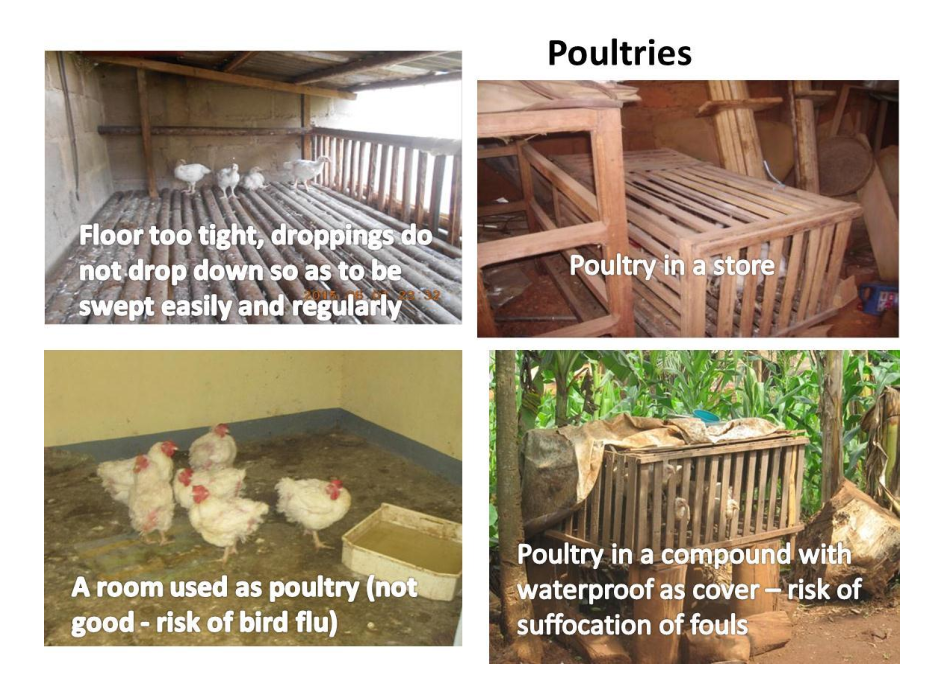
- Most piggeries and poultries are very dirty and have offensive odor.
- Some people do not properly use their mosquito nets; some use it as window blinds.
- Building in the Mulang river bed thus narrowing it,
- One bus carrying students to the field bring the second batch very late in the field when most parents would have left the house
- In the spirit of multi sectorial development of health:
- The Regional Delegation of Public Health (Ministry of Public Health) should stop the selling of manyanga (palm kernel oil) in health facilities.
- The Ministry of Animal Husbandry should train farmers to keep clean and inoffensive piggeries and poultries.
- The Ministry of Agriculture and Agricultural Schools should promote organic farming using the large amount of organic waste generated from our households and markets.
- The Ministry of Public Health, WHO and UNICEF should establish the proportions for target populations to be used as denominators in EPI.
- Let the Ministry of Environment promote clean environment by contributing to the stop the use of herbicides.
- The Ministry of Public Health should carry out the surveillance of Birth Defects, spontaneous abortions and still births in all health facilities.
- The Ministry of Industry and Commerce should promote the use of palm kernel oil for soap making only.
- The regional Delegation of public Health should properly train of health workers on vaccination and recording of vaccination dates.
- The City Council should grade the road from City Chemist Junction through Mulang Health Area.
Let us promote organic agriculture
• Let us separate household waste and waste from
the markets into organic and inorganic;
• Let us take the organic waste to our farms and use it
as organic fertilizer.
• Setting up an industry for producing organic
fertilizer out of these organic waste, will serve as a
source of employment.
• The Ministry of Agriculture should lead us
The Council Should
- Clean the water bed of Mulang River.
- Prevent people from building in Mulang River Bed.
- Provide more dustbins in the streets.
- Recruit Sanitary inspectors to inspect the sanitary conditions of bars , restaurants, the environment and
toilets; and provide IEC for behaviour change.
The FHS should inform the community by mass media well before hand of the date of community health
practice to be carried out by students.
The University should provide 2 buses to carry the students to the field; one bus could bring them back
CONCLUSION
1. We have tried as much as possible to present to you the results of the Community Health Practice in
Mulang Health Area concerning the assessment of environmental sanitation and evaluation of vaccination coverage of children aged 0-23months.
2. We are grateful to the community for their cooperation and welcoming spirit.
3. We are also grateful to the mobilizers who facilitated our work by taking us exactly to houses with children of our required age range (0-23 months).
4. We plead the information that we have provided will help us improve the living conditions of our population in Mulang Health Area at our various posts of responsibilities.
5. We are very grateful to the school authorities for organizing this course.
Tools
i)
Questionnaire for the environmental sanitation
ii)
Questionnaire for the collection of data on vaccination status
iii)
Manual synthesis form for the synthesis of environmental sanitation
questionnaire
iv)
Manual synthesis for the compilation of data on vaccination status
v)
Software for the zone synthesis of data from the manual synthesis of
sitesof environmental sanitation
vi)
Software for the zone synthesis of data from the manual synthesisof zone
of vaccination status from sites
vii)
Health Area software for the synthesis of zones for environmental
sanitation
viii)
Health Area software for the synthesis of zones for evaluation of
vaccination coverage rate.
References:
• Course on community health practice , medicine 2 by Dr Daniel Mfonfu UNIVERSITY OF BAMENDA[UBa] , FACULTY OF HEALTH SCIENCES [F.H.S.] ,2015;
• Course on Environmental Sanitation , medicine 1 by Dr Daniel Mfonfu UNIVERSITY OF BAMENDA [UBa], FACULTY OF HEALTH SCIENCES, 2013/2014;
• Skin Rashes in children and PALM KERNEL OIL (Manyanga) in BAMENDA, CAMEROON, July –
August 2007;by Dr Daniel Mfonfu.